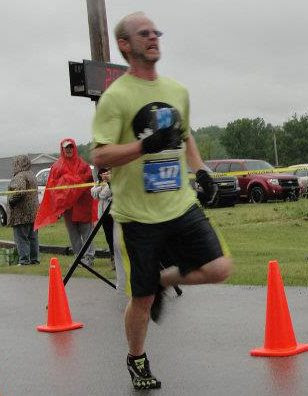
My long run this past weekend was one of those "bad" runs.
It started out fine, but before I was even 1/3 of the way done my speed was dropping and I just felt bad. I kept going, and kept getting slower, and finished the last mile walking.
The first time I had a bad run, I wasn't sure how to handle it mentally. Negative thoughts bounced around in my mind,
"I'm supposed to be faster, I'm supposed to be able to handle this, maybe I'm not as good at this as I thought I was."
Now I have learned how to benefit from the bad run.
1. Consider the factors that led to the underwhelming performance.
In my case, it was the hottest run I'd had this year, the longest run I'd gone on since my ultra-marathon in March, I had spent the previous day canoeing, I probably started off a little bit under hydrated, and I was under a large amount of personal stress.
2. Make changes as needed.
This weekend I will freeze my water bottles so that by the time I reach for gatorade it won't be 85 degree gatorade. I will try to get more rest the day before the long run. I will adjust my planned mileage down a little bit.
3. Monitor your next few workouts to see if this was a fluke or part of a larger trend.
On my next run, two days later, I was back up to my usual performance, so I think this one was a fluke.
4. Keep a workout log.
Not only can you look back on your log to see what caused the bad workout, you can use it to plan ahead to avoid future problems.
Wednesday, June 18, 2014
Friday, June 13, 2014
Personal Training or Group Fitness
There are advantages to personal training, and there are advantages to group fitness. In the end, it is not a matter of one being superior to the other, but which one is the best fit for an individual.
Personal Training.
If you don't know where to start, a trainer knows how to get you started.
If you've hit a plateau and aren't seeing results, personal training can help you get past the plateau.
Personal training provides accountability.
The more specific your fitness needs, the better off you are with a personal trainer.
Group Fitness
Generally less expensive than personal training.
Get support and camaraderie from the group.
Knowing that you can only go to the class at the time it is offered prevents procrastination.
Thursday, June 12, 2014
How To Run Faster
It was a crisp October morning. Unsure of whether to expect dew or frost on the grass I got out of bed, started breakfast, pinned my race bib on to my shirt and went about getting ready for my day. I had been an adult onset runner for just eleven months and at this point my number one goal was to run faster every time that I raced. I knew that I wasn't going to be among the first to the finish line, but I also knew that I would likely finish in under 21 minutes. This would be an improvement of six minutes over my first 5K less than one year before.

I studied runner training to learn the science behind improving as a runner. I cruised online on google+ and facebook listening to questions runners from around the world had and reading about their experiences, struggles, and successes so I could see what other runners were doing.
I learned a lot, there is a science to learning to run more quickly, and since I just wrote about how to run more slowly, I thought now I'd write about how to run faster.
1. Stop trying to run so fast all the time.
I know, I know, your fitness app applauds and sends you recorded messages from Lance Armstrong every time you run a mile faster than you have before, but if you really want to improve, running faster every training run is not the way to do it. Most of your running should be done at your "easy" pace. In fact, you can make loads of improvement in your race times using only easy runs. When your race times plateau, it is time to take on some other types of training.
2. Run faster some of the time.
Intervals, tempo runs, fartleks, reps, and strides all are ways to introduce some higher intensity running into your running schedule. When my runners are in the appropriate part of their training I start introducing higher intensity runs into a small part of their running schedule. Still 80% or more of their training will be easy runs.
3. Do some runner specific strength training.
Resistance training has been found to reduce risk of running injuries, improve core stability, improve running economy, and improve race times. It is best if the training is not just the latest workout in a fitness magazine, but a program specific for runners.
4. Don't forget to have fun.
For most of us, it is not our job to win races. If that is the case it is important that you are enjoying your running. There are tons of benefits of running, so that even if you don't enjoy every single run, you should at least be enjoying the results of running. Just don't forget to have fun on your runs. It is really difficult to train harder to run faster if you hate going out for your run. Find ways to keep it fun, change intensity, find new routes, enjoy the scenery, run with a friend. . . Do whatever makes running enjoyable.

I studied runner training to learn the science behind improving as a runner. I cruised online on google+ and facebook listening to questions runners from around the world had and reading about their experiences, struggles, and successes so I could see what other runners were doing.
I learned a lot, there is a science to learning to run more quickly, and since I just wrote about how to run more slowly, I thought now I'd write about how to run faster.
1. Stop trying to run so fast all the time.
I know, I know, your fitness app applauds and sends you recorded messages from Lance Armstrong every time you run a mile faster than you have before, but if you really want to improve, running faster every training run is not the way to do it. Most of your running should be done at your "easy" pace. In fact, you can make loads of improvement in your race times using only easy runs. When your race times plateau, it is time to take on some other types of training.
2. Run faster some of the time.
Intervals, tempo runs, fartleks, reps, and strides all are ways to introduce some higher intensity running into your running schedule. When my runners are in the appropriate part of their training I start introducing higher intensity runs into a small part of their running schedule. Still 80% or more of their training will be easy runs.
3. Do some runner specific strength training.
Resistance training has been found to reduce risk of running injuries, improve core stability, improve running economy, and improve race times. It is best if the training is not just the latest workout in a fitness magazine, but a program specific for runners.
4. Don't forget to have fun.
For most of us, it is not our job to win races. If that is the case it is important that you are enjoying your running. There are tons of benefits of running, so that even if you don't enjoy every single run, you should at least be enjoying the results of running. Just don't forget to have fun on your runs. It is really difficult to train harder to run faster if you hate going out for your run. Find ways to keep it fun, change intensity, find new routes, enjoy the scenery, run with a friend. . . Do whatever makes running enjoyable.
Friday, May 30, 2014
How To Run More Slowly
I just imagined three different responses to that title:
"Why would I want to run more slowly?"
"Finally, I've been trying to run more slowly ever since I heard about heart rate training!"
"WHY WOULD ANYBODY RUN, IT'S BAD FOR YOUR KNEES, SOMETHING WOULD HAVE TO BE CHASING ME FOR ME TO RUN AT ALL. . ."

Why running slowly is good.
Running quickly and running slowly are relative things when it comes to choosing your training pace. Running slowly for me is faster than running slowly for my wife. Running slowly for Meb Keflezighi is faster than running quickly for me. When I use the phrase running slowly, what I am really talking about is running within one's aerobic pace.
For endurance runners, the easy run is a crucial part of training. Benefits include strengthening of bones, ligaments, tendons, and muscles, increased capillary capacity, increased mitochondrial density, improved aerobic capacity, improved running economy, and the list goes on.
The problem is, that some people don't feel like the easy runs are hard enough, so they run faster and push themselves out of the aerobic training zone and don't get all the benefits of the easy run.
How to run slowly.
First, if you want a primer on how to determine your maximum heart rate for easy, aerobic running, click here.
That post gives the nuts and bolts of determining heart rate for an easy run, but I've also been asked about how, physically, to actually run slowly. It is easier than you think.
Start off with a moderate walking pace. As you are walking, monitor your breathing, and increase your pace gradually. There will come a point at which a walking gait no longer feels comfortable at the speed you are moving. Allow your body to adjust naturally and you will adopt a running gait. If you've been running too fast, it won't seem like a run, maybe a jog, or a shuffle, but congratulations, you are now running more slowly.
If this still puts you out of your aerobic zone, as discussed here use a run/walk interval system. Once you are breathing too hard, slow down to a fast walk, when that starts feeling too easy, speed up to a slow run again, repeat the process until you find your sweet spot.
Good luck and happy slow running.
"Why would I want to run more slowly?"
"Finally, I've been trying to run more slowly ever since I heard about heart rate training!"
"WHY WOULD ANYBODY RUN, IT'S BAD FOR YOUR KNEES, SOMETHING WOULD HAVE TO BE CHASING ME FOR ME TO RUN AT ALL. . ."
Why running slowly is good.
Running quickly and running slowly are relative things when it comes to choosing your training pace. Running slowly for me is faster than running slowly for my wife. Running slowly for Meb Keflezighi is faster than running quickly for me. When I use the phrase running slowly, what I am really talking about is running within one's aerobic pace.
For endurance runners, the easy run is a crucial part of training. Benefits include strengthening of bones, ligaments, tendons, and muscles, increased capillary capacity, increased mitochondrial density, improved aerobic capacity, improved running economy, and the list goes on.
The problem is, that some people don't feel like the easy runs are hard enough, so they run faster and push themselves out of the aerobic training zone and don't get all the benefits of the easy run.
How to run slowly.
First, if you want a primer on how to determine your maximum heart rate for easy, aerobic running, click here.
That post gives the nuts and bolts of determining heart rate for an easy run, but I've also been asked about how, physically, to actually run slowly. It is easier than you think.
Start off with a moderate walking pace. As you are walking, monitor your breathing, and increase your pace gradually. There will come a point at which a walking gait no longer feels comfortable at the speed you are moving. Allow your body to adjust naturally and you will adopt a running gait. If you've been running too fast, it won't seem like a run, maybe a jog, or a shuffle, but congratulations, you are now running more slowly.
If this still puts you out of your aerobic zone, as discussed here use a run/walk interval system. Once you are breathing too hard, slow down to a fast walk, when that starts feeling too easy, speed up to a slow run again, repeat the process until you find your sweet spot.
Good luck and happy slow running.
Wednesday, May 28, 2014
Great Workout! Not Sore?
It was the day after weight training and. . .
I wasn't sore, so I went for an easy three mile run. The next day, still not sore, easy four.
It was a great workout, challenging, full body, heavy (for me) sets, but I never got sore. It was three sets of each exercise in the 4-8 rep range, meaning that if I could do the lift 9 times, I added weight until I couldn't, but I still didn't get sore. Sure I could feel the results of the workout, I could tell which muscles were tired, but it was nothing to stop me from my running schedule.
I am a runner who lifts. I don't lift to burn calories, or so people will be " 'mirin' my aesthetics". I don't do weights to burn extra calories, the only time I count calories is when I'm making sure I've had enough of the little guys that day. I lift to make my running better, so what good would it do me if I can't even walk the next day.
Whether you are a runner or not, soreness is not the goal of a workout. It is often a side effect of a workout, and if you have muscle soreness it isn't the end of the world. If you are new to resistance (weight) training or if you move in a new way during weight training there is a very good chance you will be sore until your body adapts to the new movements. The soreness however, is not the goal.
If your goal is to feel sore (why?) that is easy to accomplish, you don't even have to do any work just come in and I'll practice my Muay Thai kicks on your thighs. I guarantee you'll go home with sore legs.
If your goal is progress, come in and we will work smarter. Yes, you may get sore at first. Yes, it is OK for you to be excited about the soreness. No, soreness will not be the goal.
The goal is up to you. Lift more, run faster, burn fat, improve bone strength, improve metabolism. . .
How you want to feel is up to you. Stronger, leaner, healthier. . .
Monday, May 19, 2014
On a Mission.
Mission based fitness.
That might sound a little dramatic, but that is a pretty good description of my thinking. I am on a mission.
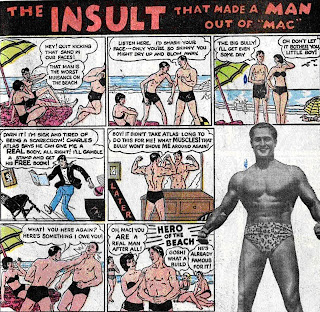
My mission is not to promise you shredded abs, or a bikini body in six weeks. It is not to guarantee you explosive muscle growth so that guy on the beach will stop kicking sand in your face.

My mission is not to burn belly fat and fit you in to your jeans.
If those are your goals, I have some good news my mission will help with those goals, but those are not what my mission is about. Weight loss, muscle growth, toning and fat loss are the side effects of my mission, not the goal.
My mission is to help you become more able to carry out your mission. I believe that every single person has something important to do. Your mission might be research that will eliminate some horrible disease, or it might be raising a child, it could be encouraging girls to become engineers, or it could be teaching boys to be respectful of women when they reach dating age.
The point is, whatever your mission, my mission is to help you be physically fit enough to make it happen. Without good health, your mission will be cut short. It will be curtailed by lack of energy, by time spent in doctor's offices and hospitals, and it will be stopped abruptly by an early death.
My mission is to grant you more energy, more strength, and more years on this planet so that you can coach little league, teach robotics to kids, get families out of poverty, cure cancer, raise a child all the way into adulthood or whatever your mission should be.
So please, eat right and get fit.
If you want help with it, contact me.
That might sound a little dramatic, but that is a pretty good description of my thinking. I am on a mission.
My mission is not to promise you shredded abs, or a bikini body in six weeks. It is not to guarantee you explosive muscle growth so that guy on the beach will stop kicking sand in your face.

My mission is not to burn belly fat and fit you in to your jeans.
If those are your goals, I have some good news my mission will help with those goals, but those are not what my mission is about. Weight loss, muscle growth, toning and fat loss are the side effects of my mission, not the goal.
My mission is to help you become more able to carry out your mission. I believe that every single person has something important to do. Your mission might be research that will eliminate some horrible disease, or it might be raising a child, it could be encouraging girls to become engineers, or it could be teaching boys to be respectful of women when they reach dating age.
The point is, whatever your mission, my mission is to help you be physically fit enough to make it happen. Without good health, your mission will be cut short. It will be curtailed by lack of energy, by time spent in doctor's offices and hospitals, and it will be stopped abruptly by an early death.
My mission is to grant you more energy, more strength, and more years on this planet so that you can coach little league, teach robotics to kids, get families out of poverty, cure cancer, raise a child all the way into adulthood or whatever your mission should be.
So please, eat right and get fit.
If you want help with it, contact me.
Friday, May 2, 2014
Some Reasons I Exercise
The reasons I exercise boil down to a few simple statements.
1. Being strong fit and healthy feels good.
2. I want to live a longer, happier life.
3. I want to be able to do things that I could not do without my strength and fitness.
If that were all there was to this post it would be pretty dull, so here are some more memorable examples of the above.
Reasons I Exercise.
For views like these.
![]() |
| Also on our bike/run routes. |
![]() |
| Somewhere on the country roads my wife and I run and bike on. |
Because this is miles off road.
![]() |
| Some miles down a trail at Mammoth Cave National Park
Because starting lines are exciting places.
|
![]() |
| My wife's first marathon |
Because nothing else makes a cold bottle of water feel this good.
![]() |
| My first Olympic distance triathlon. 5 minutes shy of my goal time. |
For winter trail runs with a
beautiful woman.
![]() |
| Trail running together at Mammoth Cave National Park |
Because you never know when you'll have to escape from dinosaurs.
![]() |
| Dinosaur World! |
Or zombies.
![]() |
| BRAINS! |
To be around for more birthdays.
![]() |
| My daughter's fifth. |
And more Christmases.
Because pushing past what I thought my limits were
is an incredible feeling.
![]() |
| For details on my first Ultra-Marathon, click here. |
Subscribe to:
Posts (Atom)